

Willow Worlds Update
Spring 2026.


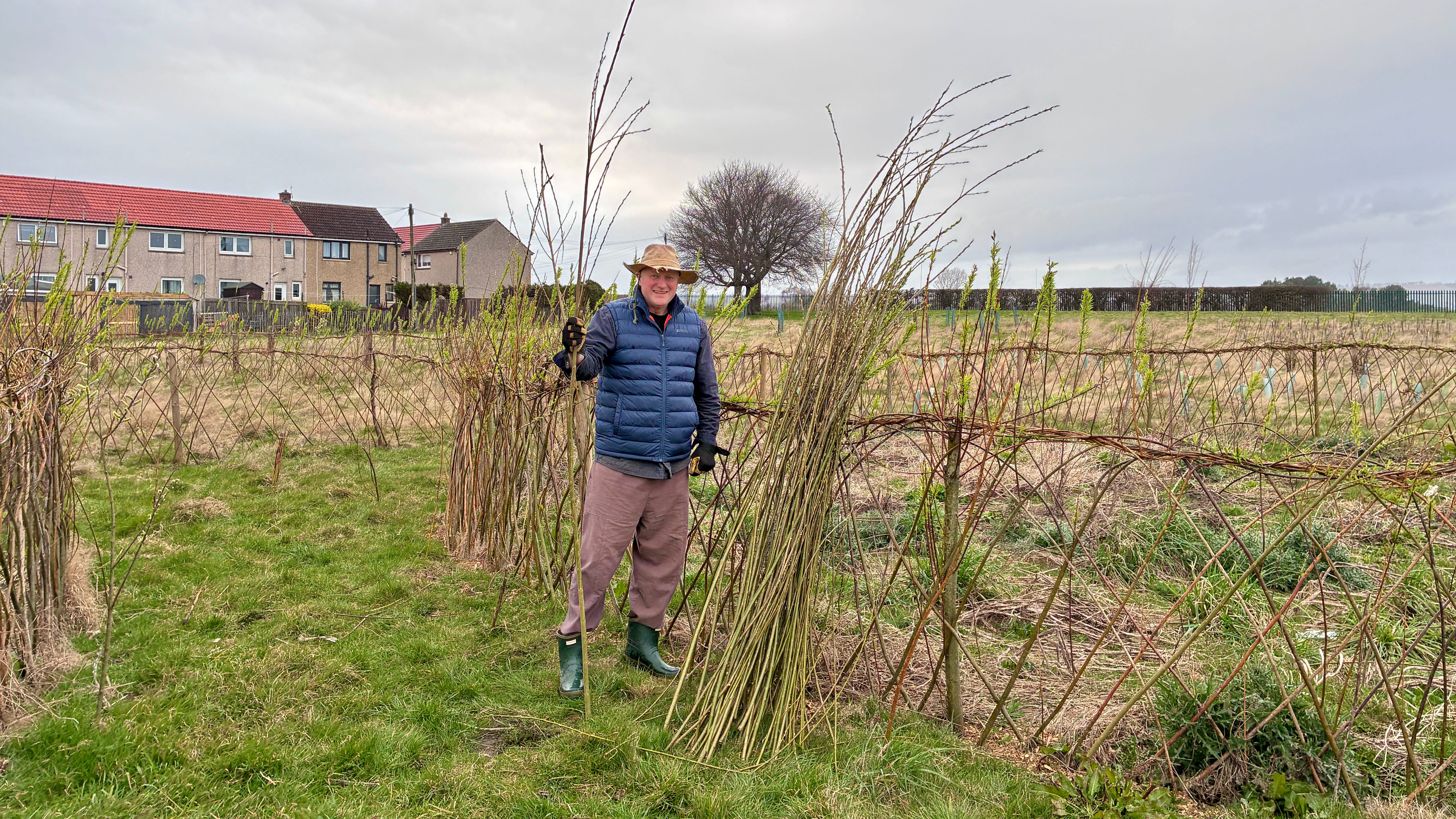
Cutting back in winter is the healthiest for the tree. The willow wills us to cut in winter so it grows back in summer, as an ancient act of resilience and community. The very thing that sustains the project is the fact that it needs cutting back every year and we humans really should do our part and make use of the harvest. We have replaced the mammoths of the Pleistocene with the metal loppers of the Anthropocene; and we can’t change the rhythm of the seasons.
This spring (2026) is warm and wet - all the willow is going to grow fast and strong this year. But let’s have a review of where we are having come to the end of the planting season.
Muiredge Park: Willow Worlds 1 (WW1).
Willow Worlds in Muiredge Park consists of about 900 rods of willow planted in January 2025, the dry spring that last year slowed growth but the living structures are generally healthy. The thin green rods have been woven back in to allow the trees to get a bit more comfortable and established. It also gives the structure more strength.
During the year 2025, deer did only minor damage and the willow has made a decent job of self-repairing; worth noticing that the deer butted and nuzzled but didn’t (thanks to the weave of the willow) kill the tree.
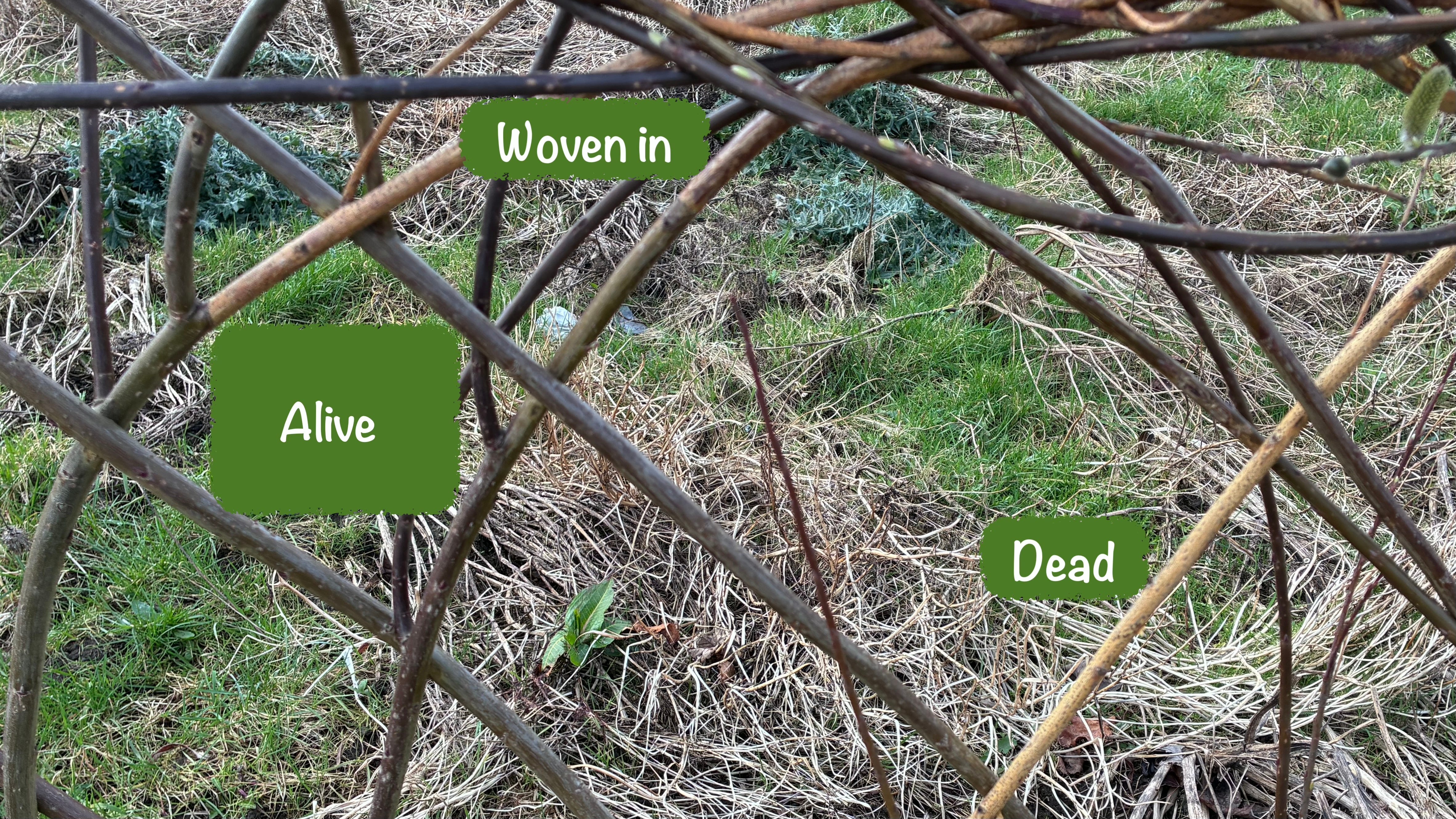
There are some rods of willow that did die to become brown sticks in the fedge and something should be said about that. We did what we could to establish why the willow died, we identified 3 possible culprits which we can call the 3Ps: planting, poo and parched soil.
Planting: rods not getting deeply planted enough into the soil.
Poo: there had been too much hot manure in that part of the trench.
Parched Soil: the spring had been dry.
Now, the dead branches are still there, slowly rotting. Next to them we have installed new rods for 2026, a sort of refreshment of about 50 rods from the 2.5m long willow crop at Bat’s Wood (Levenmouth Academy). This simple refresh only took an afternoon to complete and we are optimistic that these ones will do better - better planting, older manure and an already noticeably wetter spring.
And that’s about it for the Muiredge Willow Worlds site: the saplings are growing inside their enclosures, the enclosures are intact, self-repairing and reinforced and we intend to do absolutely nothing more for them in 2026. Willow Worlds is so sustainable that we can afford to do nothing to sustain it this year! Which happily enough, is what our income for the year 2026 affords, apart from the few pounds that this Substack makes.
So we’re set for 2026 to be a year of growth and laziness at Muiredge Park and with the warm, wet spring we’ve had - the willow is going to absolutely boom!
Other Local Willow.
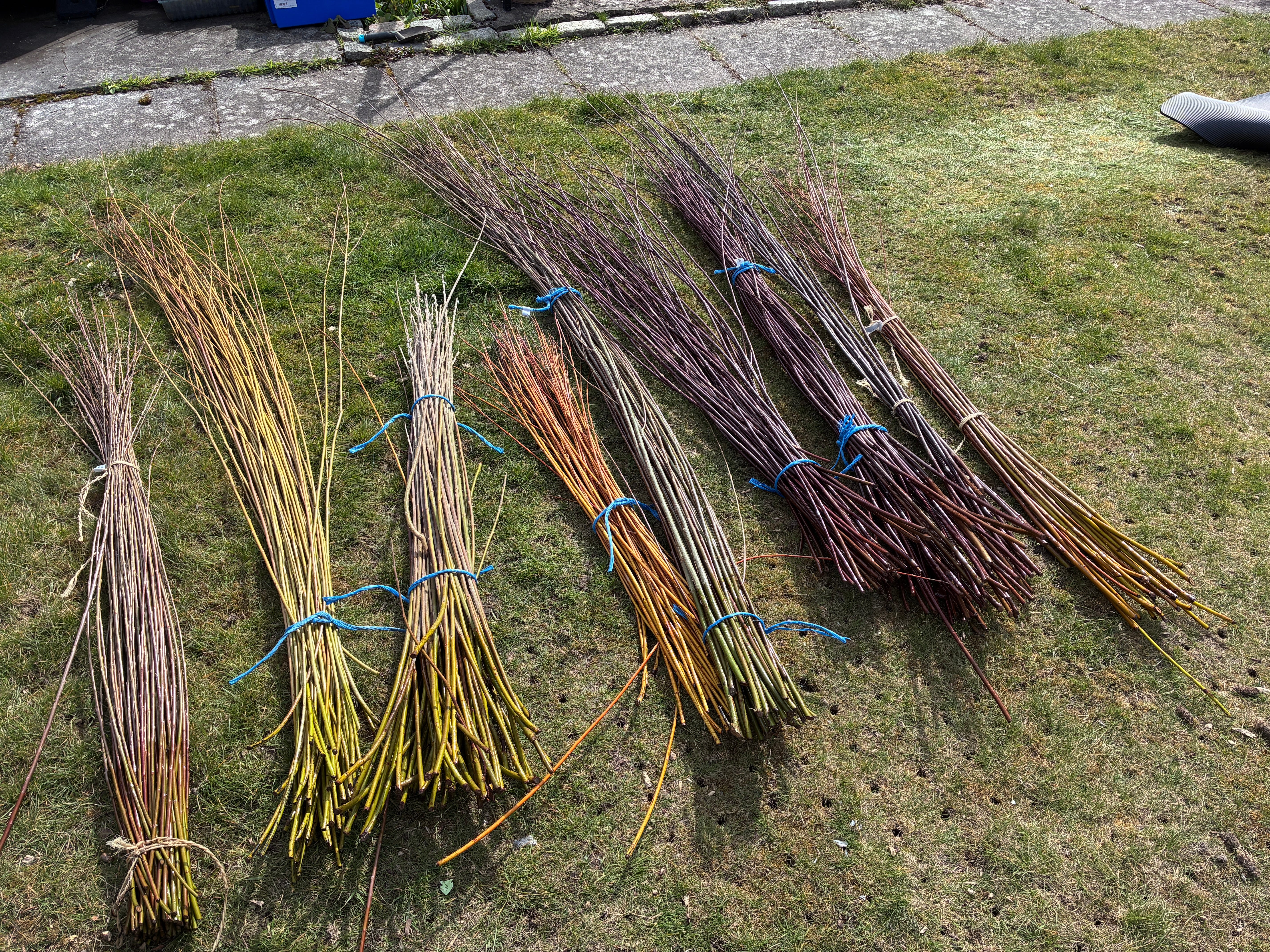
You might remember that we had locally sourced willow for this project last year and if you think about how willow keeps growing back, you might ask: what happened this year?
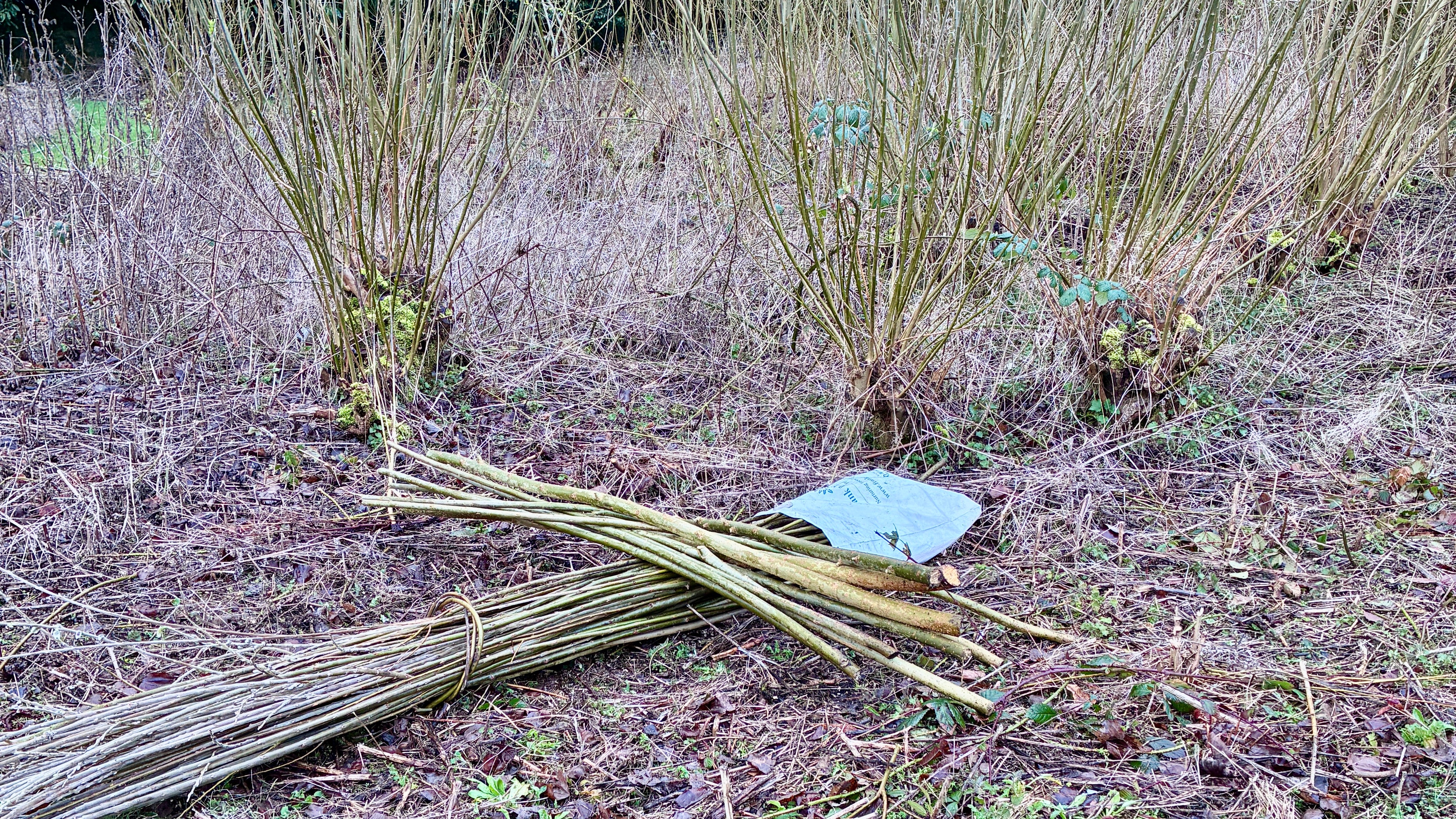
So we cut it down and gave most of it away on Freegle.
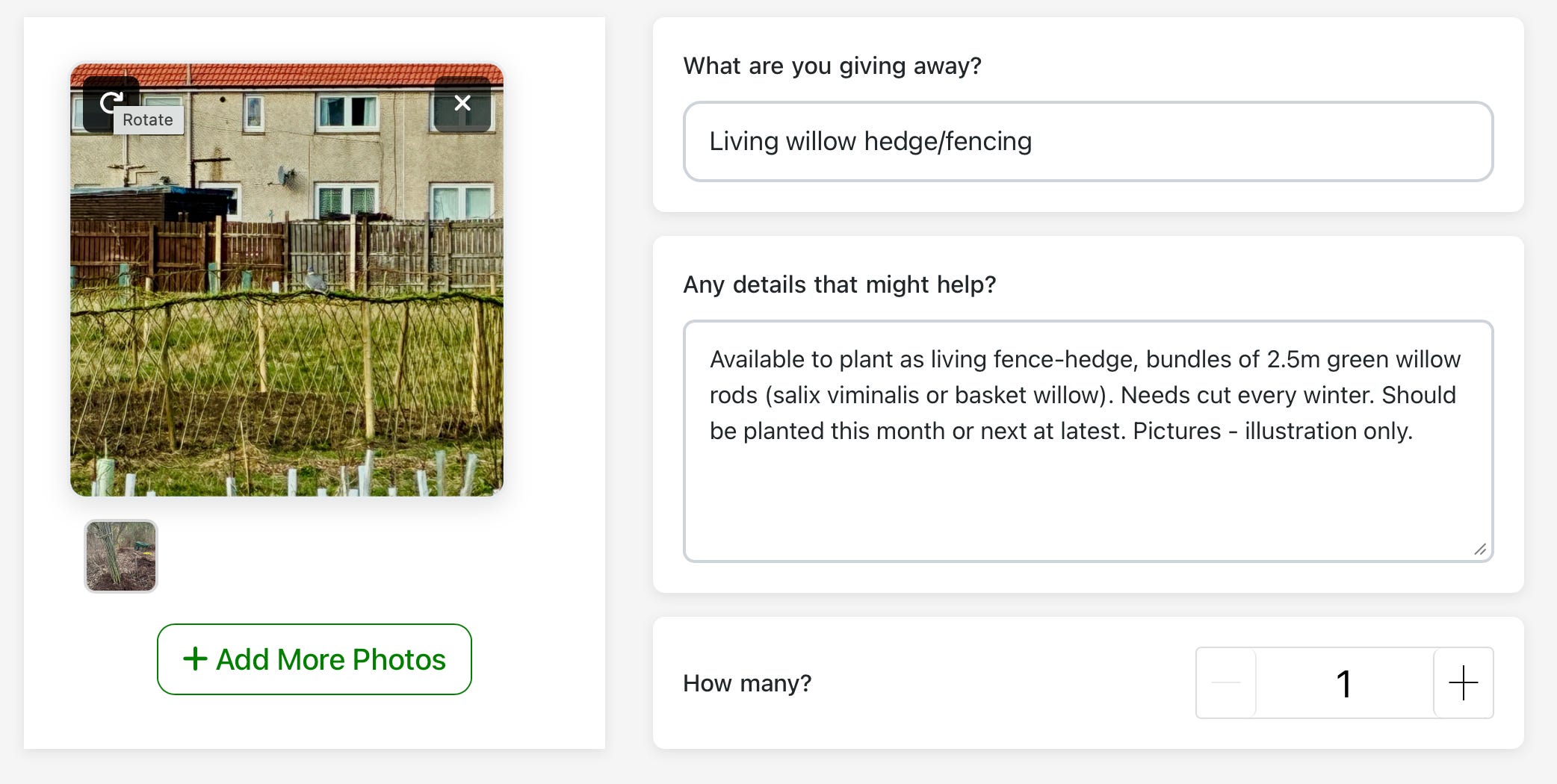
Freegle is an app for giving things away for free, it’s a good mix of environmentalists, activists, good citizens and hoarders. Anyway, I did that and asked the people how they got on with it.
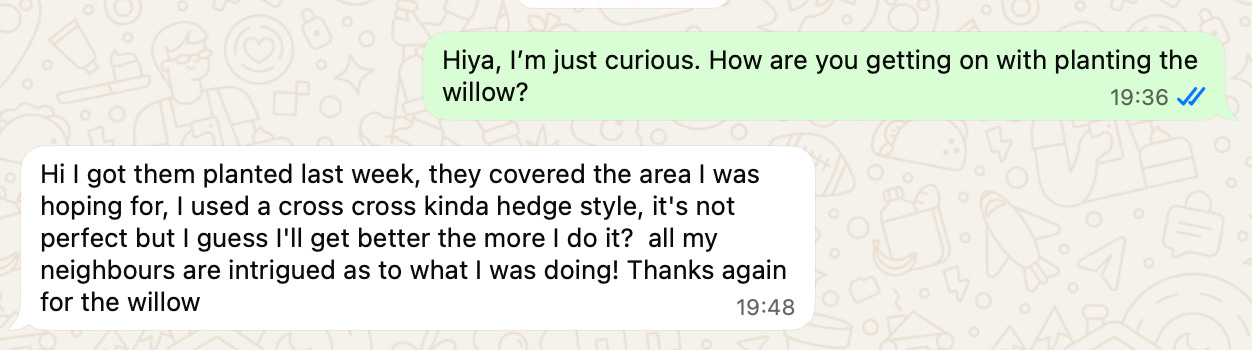
Some didn’t give me much detail, one didn’t turn up but from what they said I think the willows have a good chance of finding a new home:
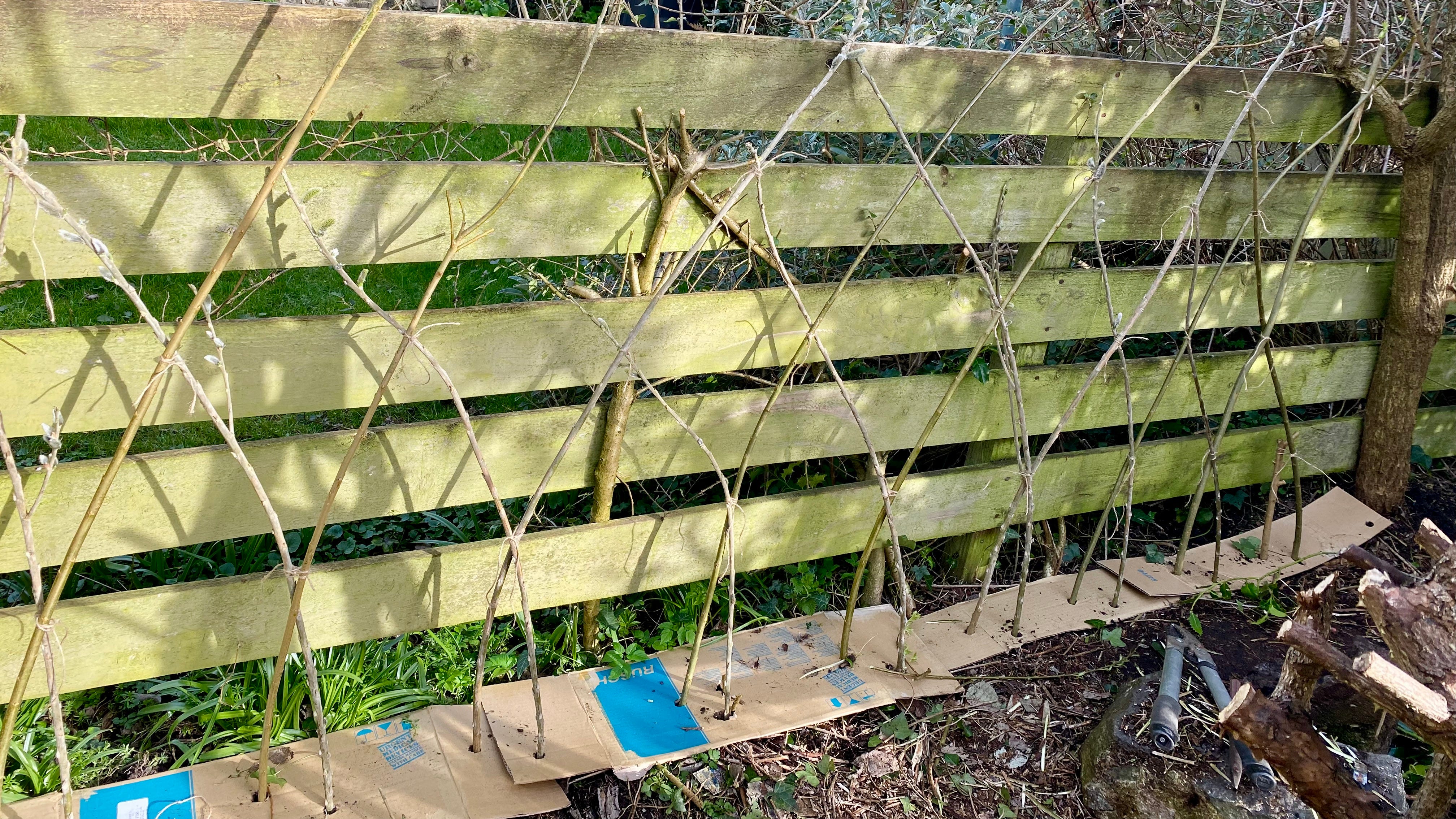
On the other hand, Lucy in Newburgh sent lots of photos about her garden projects and she’s using willow for bank stabilisation as well as a fedge to hide a wooden fence.
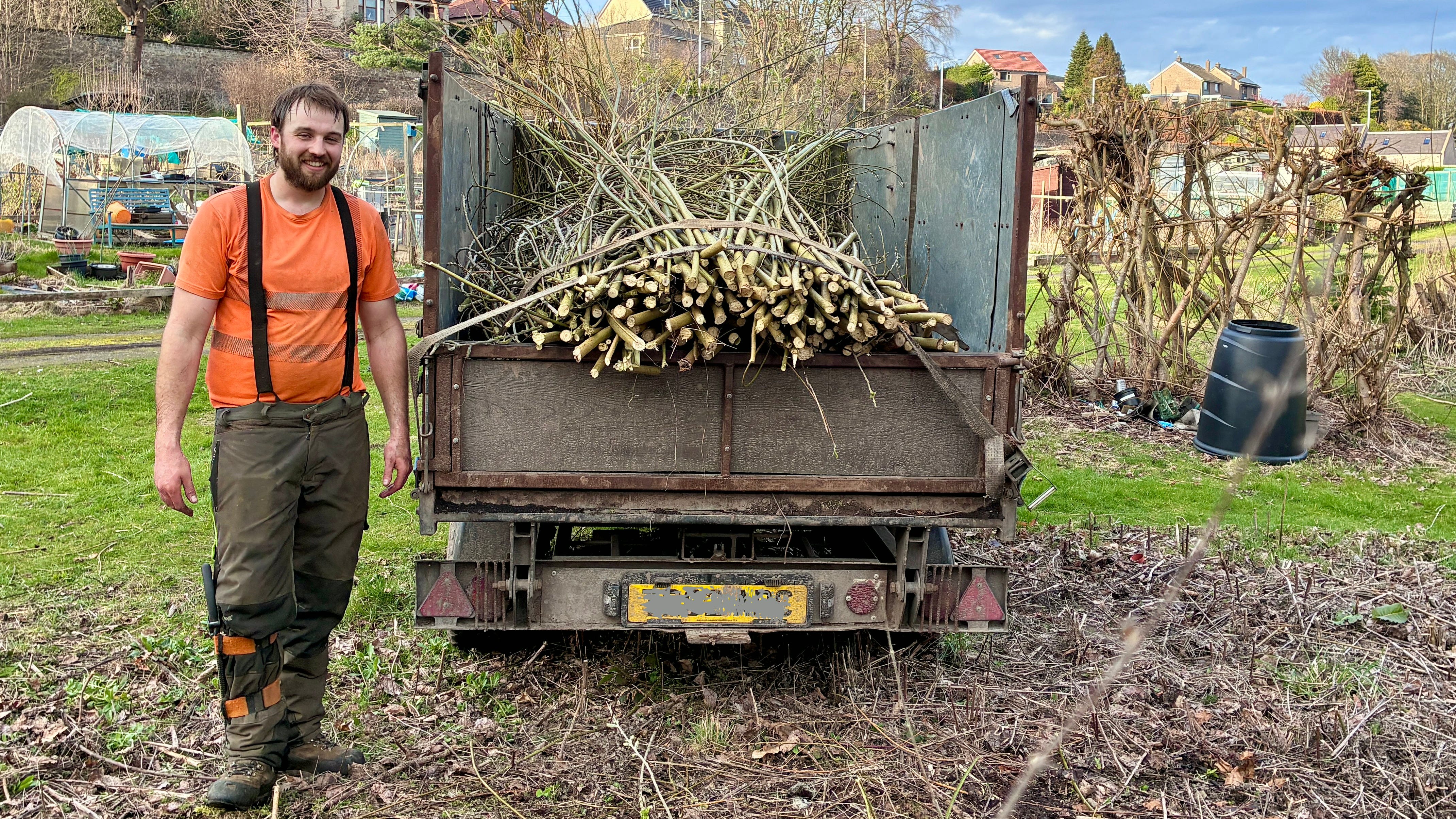
Then there was John Scott a tree surgeon from Auchterhouse. He apparently had been thinking along the same lines as Willow Worlds and the advert on Freegle put us together. John bought a piece of woodland and says his…
“…aim is to grow new coppice and regrow harvested coppice for the local sustainable production of charcoal and other coppice products ( fence posts, hedging steaks and binders, bean poles, woven wattle fencing etc... ) [It’s a] bit of an experiment with the high roe deer population and shallow subsoil (1 foot max). [It would be] so very difficult to install normal deer fencing [here] as the posts need to be buried 3ft deep and hiring rock-cutting auger and buying fencing materials would be very expensive. So if the willow worlds work they will be a very good and cheap alternative and definitely look better than an 8 foot deer fence…”
The new willow in Auchterhouse marks a new beginning - John’s expecting a baby in the near future. Good luck to the young family and their new Willow World!
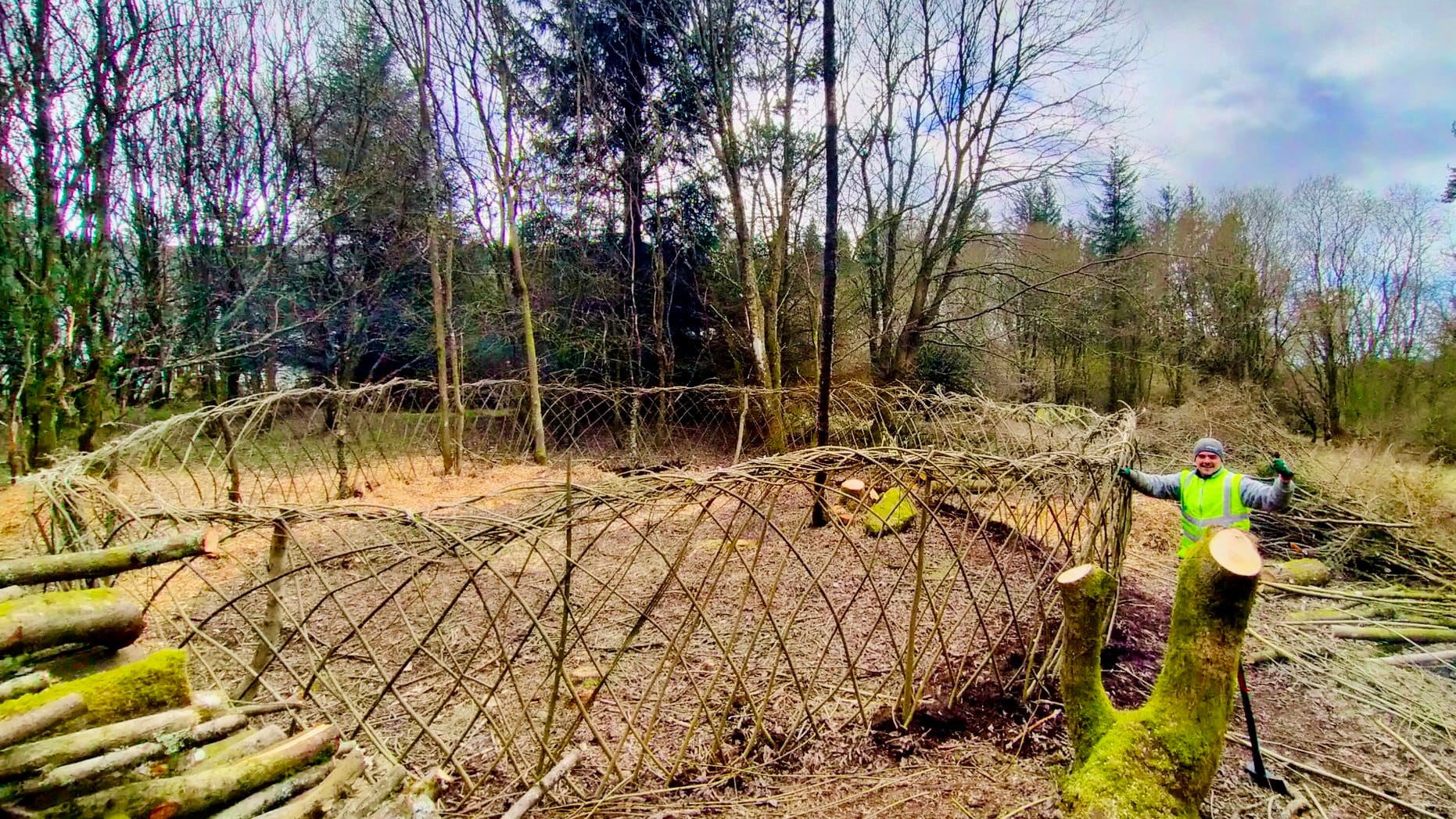
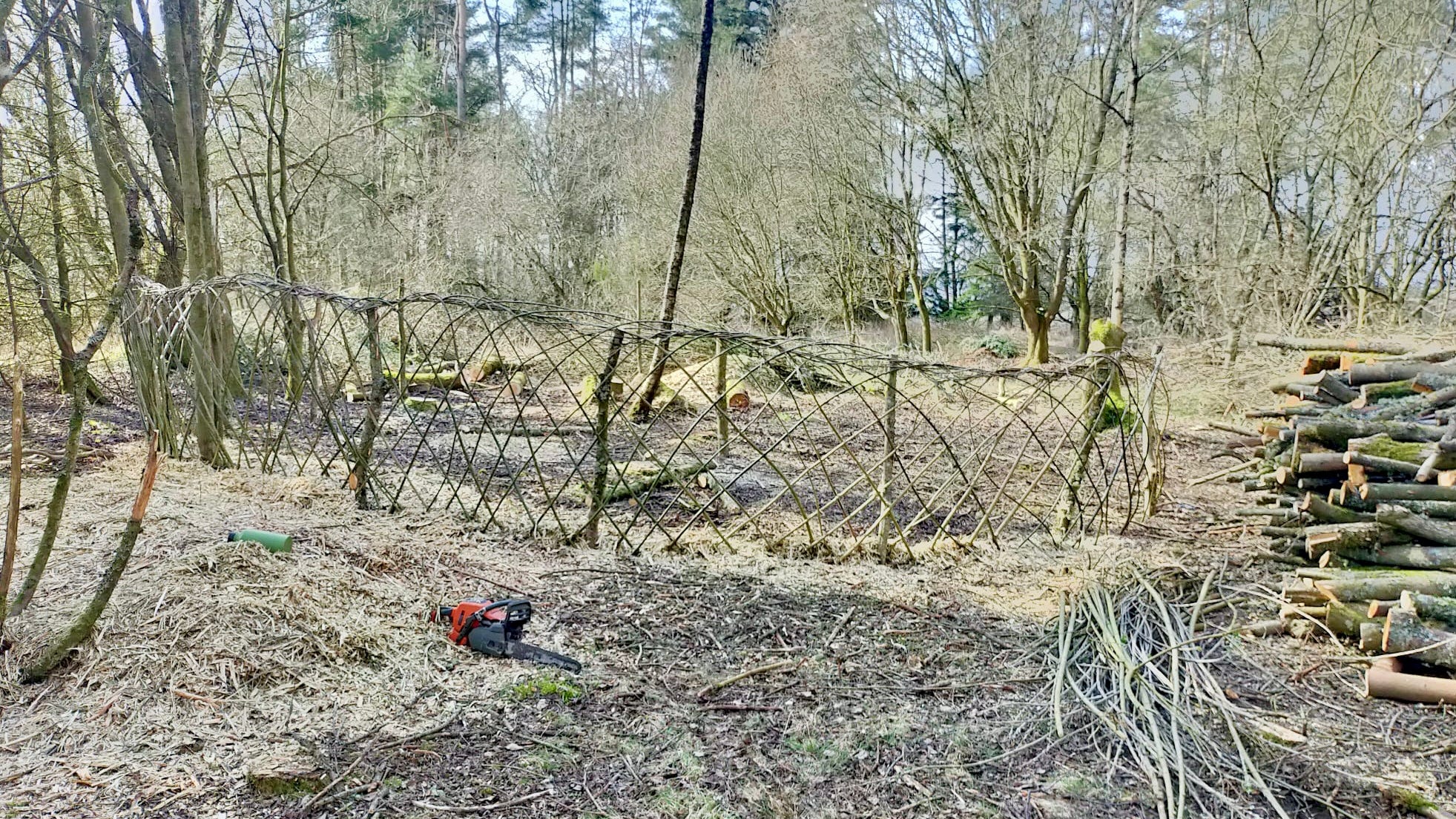
John and Jean-Baptiest: “We planted sweet chestnut, hazel and oak seeds inside and outside the world so [we] will be able to compare the growth and grazing pressure of both, also some coppice stumps inside the world and outside so will be able to compare the grazing pressure of those too.”
 | A guest post by
|